What Horses Know About Leading (That You're Missing): An Interview with Marycay Durrant
How Authentic Presence Became Your Most Powerful Leadership Tool
You earn a leadership position because of your skills and expertise. And now you're leading people who should follow you. Except sometimes they don't.
There's a version of leadership you learned that says: demonstrate authority, show confidence, deliver results, repeat. Move fast. Be decisive. Don't let them see you sweat.
But there's something that version is missing.
The Mirror That Doesn't Lie
Meet Marycay Durrant. For the past several years, she's been working with some of the most successful companies in the world—Pepsi, Deloitte, PayPal, Children's Hospital Los Angeles—helping their leaders become what they claim to be.
And her tool? Horses.
Not as therapy. Not as metaphor. As mirror.
Horses have spent 55 million years perfecting the ability to sense what's real and what's performance. They can pick up the emotional frequency you're broadcasting before you're consciously aware you're broadcasting it. A thousand times more acutely than a human can.
You can't fake with a horse.
The thing that will work is your presence.
The Star Athlete and the Second-String Player
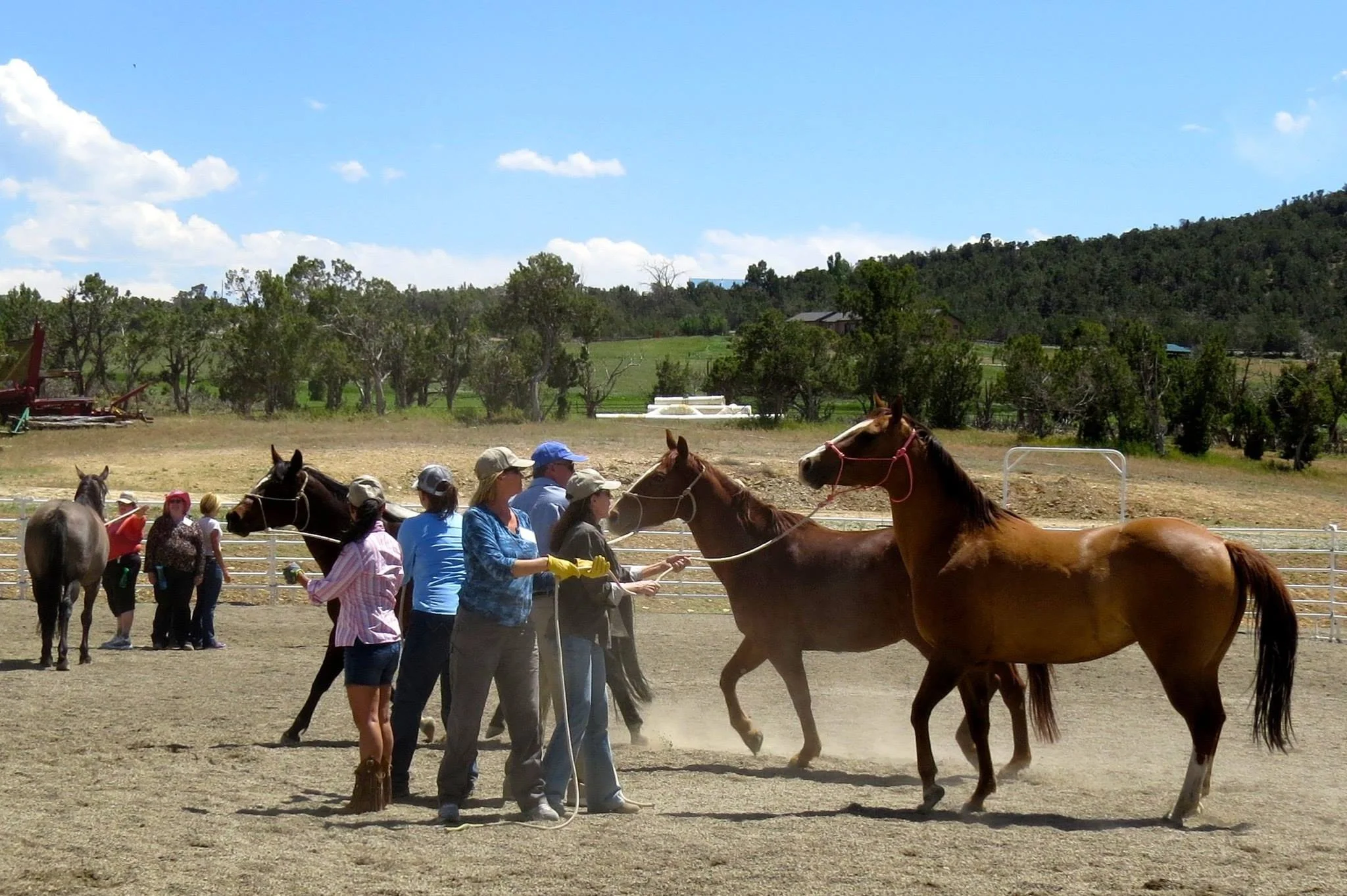
Marycay recently led an equine experience with a divisional women's athletic program. One of those vulnerable-making firsts where most of the athletes had never been close to a large animal before.
The star player walked into the arena the same way she walks into every challenge: confident, in control, used to people responding to her authority. She carried herself with the kind of presence that had worked her whole life.
The horse looked at her and said no.
A second-string athlete who wouldn't normally be anyone's idea of a leader came in differently. She was nervous and uncertain. But present and genuine. She didn't have a practiced performance ready.
She embraced the horse. The horse embraced her. And then something remarkable happened: the horse followed her around the entire arena, willing participant in whatever came next.
The star athlete couldn't fake it. The second-stringer didn't need to.
One was performing confidence. One was inhabiting presence.
The horse felt the difference. And so did everyone watching.
Here's What Actually Moves People
There's a deeply uncomfortable truth embedded in this story.
Technical excellence can only take you so far. Strategic brilliance helps, sure. But what moves people, what actually makes them want to follow you, isn't your track record or your credentials. It's whether they feel safe with you. Whether they believe you're truly seeing them. Whether they sense you're grounded enough to handle what comes next.
The best leaders Marycay sees aren't the loudest or the most polished. They're the ones operating from something deeper. They're established in what she calls a "partnering paradigm", a belief that leading isn't about command and control, it's about connection and shared purpose.
And you can feel the difference immediately.
This doesn't mean being soft or avoiding hard conversations. It means bringing truth from a grounded place, not from the ego. It means having the courage to admit what you don't know while staying clear-eyed about where you're headed. It means being aware of what your body is communicating before your mouth catches up.
Because here's the thing: your team is reading you like a horse reads energy. They're picking up the contradiction between what you're saying and what you're embodying. They notice when you're present and when you're checking email mentally. They feel your anxiety or your groundedness in ways they can't articulate but absolutely understand.
What Grounded Leadership Actually Looks Like
So how do you get there?
Daily journaling that's less about productivity and more about settling your own nervous system. What Foster calls "skipping stones," laying one small intention over another until you feel yourself settling.
The practice isn't complicated. But it's not easy, either.
When you're grounded, you operate at a different speed. Not the speed of the world around you, but the speed of your own wisdom. And from that place, you can move quickly when you need to. You can operate in the fast lane. But you're not being driven by it.
Without it? You're running on fear and adrenaline and the constant pressure to prove something. And everyone knows it.
The Concept of Healthy Pressure
One of the most useful ideas that came out of the horse work is what Marycay calls "healthy pressure."
It’s the kind where you use the minimum pressure necessary to accomplish the task while keeping the relationship intact.
In the round pen with a horse, this looks like a subtle shift of your body weight. A quiet adjustment of your intention. The horse responds not because you forced it, but because you created conditions where the right response becomes obvious.
A good leader does the same thing. You set clear expectations. You create psychological safety. You show up as grounded and present enough that people trust you mean what you say. Then you let them step into what's needed.
That's different from: "Here's what we're doing, and here's the timeline, now move."
Both might get you short-term results. But only one builds a culture where people actually want to show up.
The Female Lead Horse Teaches You Something
In horse herds, the lead horse is typically the mare. Not the stallion. The female who has the wisdom to know where water and food are. The one who pays attention to the young horses and holds the collective direction.
She leads through relationship, knowledge, and steady presence.
What does this teach us about sustainable leadership? That the old model, the strong man in charge making unilateral decisions, isn't actually the model that creates lasting performance and healthy culture.
The mare model is based on: I see you. I know where we're going. I trust you to follow. Come with me.
And that applies whether you're male, female, or leading any kind of team.
Your Next Step
If you're a new leader promoted because you're technically brilliant, strategically sharp, or incredibly connected, know this:
Your superpower got you to the table. But it won't keep you there unless you figure out how to be grounded. How to operate from presence, not performance. How to build relationships that are real enough to sustain pressure.
This doesn't mean abandoning results. It means understanding that sustainable results come from people who trust you and believe in the direction, not from people who are afraid of you or cynical about your motives.
Start small. Morning pages. Three minutes of breathing. A moment where you notice what you're actually feeling before you respond.
And if you want to understand this at a deeper level, if you want to feel the difference between performing confidence and inhabiting presence, Marycay's work with horses might be exactly what you need.
Because sometimes the most powerful wisdom comes from the teacher you didn't expect.
More From Marycay
Marycay is a leadership advisor and facilitator who works with executive teams and organizations undergoing transformation. Her clients include some of the most successful companies in the world.
Her personal philosophy: Live from Love. Live from Joy.
If you're interested in exploring equine-facilitated leadership experiences or want to learn more about her approach, her work is worth exploring.
Continue the Conversation
Every episode of Step Wise is built around one question: what does wisdom actually look like when you're in the middle of it?
This one's about presence. About authenticity. About what happens when you stop performing and start showing up.
Watch on YouTube | Subscribe to Step Wise
If this shifted something for you, share it with someone who needs to hear it. Not for our numbers. For theirs.
Set the table. Invite cool people. Magic happens.
—Foster